Culture
I Spent a Month in Rural Japan With Only an AI Translator
By Devan Park · March 30, 2026 · 5 min read
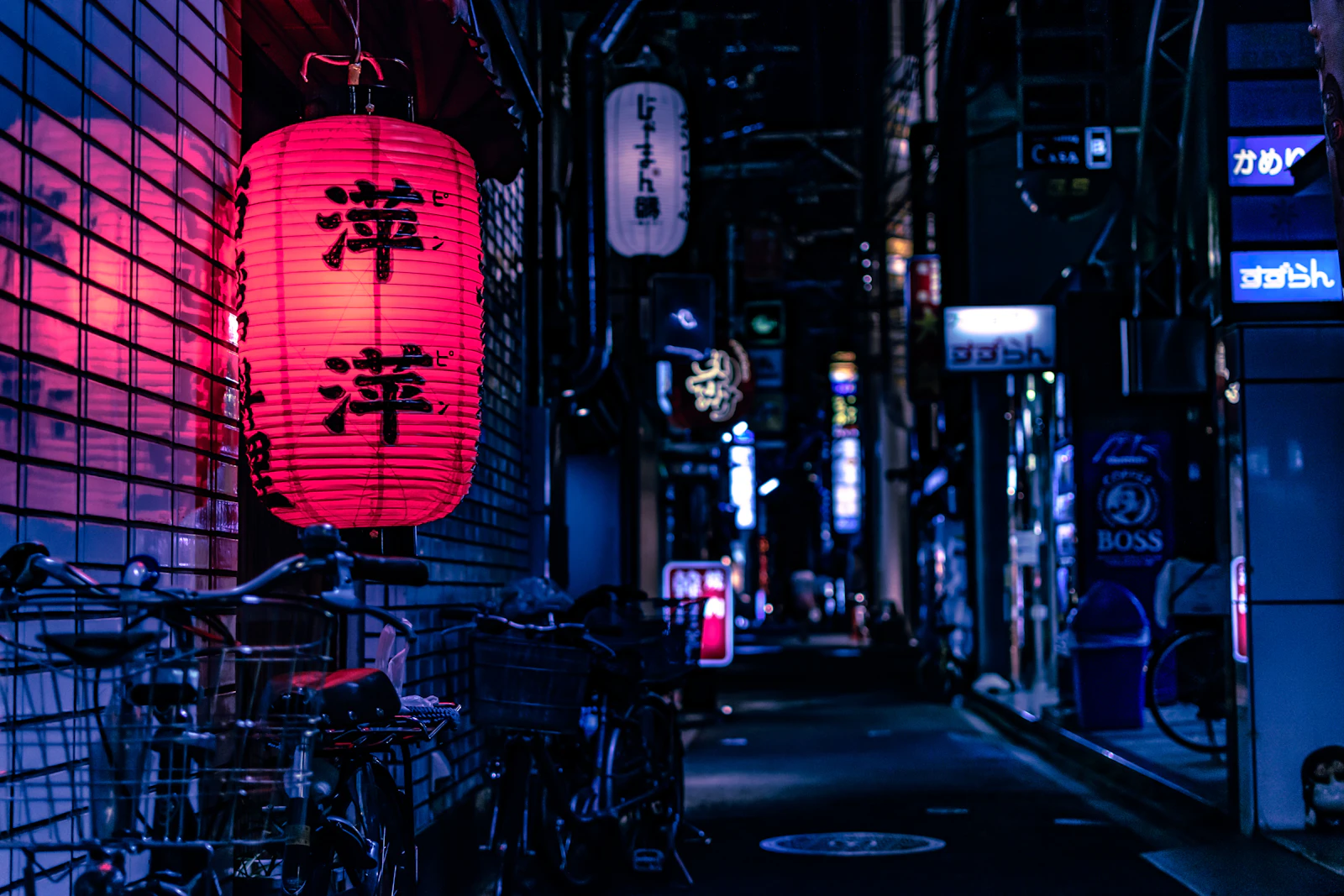
The train from Nagano city thinned out until I was the only passenger left on a carriage that smelled faintly of cedar and industrial floor wax. I stepped onto the platform at Ogawa-mura, a village of eight hundred people tucked into a crease of the Japanese Alps, with nothing but a rolling suitcase and a pair of near-invisible earbuds. My Japanese is limited to a clumsy 'arigato' and a few panicked nouns, but my phone was loaded with a low-latency neural translation engine. As I walked toward the local post office to collect the keys to my rental, I felt a familiar Silicon Valley hubris. I believed that because I had outsourced the syntax, I had solved the distance between myself and the residents of this valley. I tapped the screen, set the input to Japanese, and waited for the world to start talking to me.
The postmaster, a man named Sato-san whose skin was the texture of a well-worn baseball glove, did not look up when the bell chimed. I spoke into the air, my phone held like a digital talisman between us. 'I am here for the keys to the old weaver’s cottage,' I said. A three-second delay followed—a digital silence that feels like an eternity in a face-to-face encounter—before a synthetic, feminine voice chirped the translation from my phone’s speaker. Sato-san froze, his eyes darting from my face to the black slab of glass in my hand. He didn't smile, but he didn't recoil either. He simply reached for a ledger, his movements deliberate. The technology worked, technically speaking, but the rhythm was jagged. It was like watching a film where the audio track is slightly out of sync with the actors' lips, creating a persistent, low-level sense of unease.
By the second week, I had settled into a routine at a three-stool izakaya run by a woman everyone called Mama-san. Here, the AI began to reveal its structural biases. The software is trained on vast datasets of polite, standardized Tokyo Japanese, which is a poor fit for the gruff, abbreviated dialect of mountain farmers. When Mama-san spoke about the seasonal harvest or the encroaching wild boars, the AI struggled with her colloquialisms, often replacing her vivid descriptions with bland, corporate-sounding abstractions. I realized I was hearing a sterilized version of her life, a 'safe' translation that sanded down the edges of her humor. She would crack a joke that made the other two patrons roar with laughter, but my earpiece would only provide a dry sentence about the weather or the quality of the sake.
There is a particular kind of intimacy that develops when two people are forced to wait for a computer to mediate their friendship. In the silence between my English and the AI’s Japanese, Mama-san and I learned to communicate through the things the software couldn't touch. We traded glances over a steaming bowl of oden; she watched the way I held my chopsticks, and I watched the way she smoothed her apron when she was tired. The technology acted as a bridge, but it was a bridge with a high toll. Because I knew the translation would be imperfect, I stripped my own speech of nuance, metaphor, and sarcasm. I became a simpler version of myself—declarative, literal, and perhaps slightly boring—just to ensure the machine didn't hallucinate a different meaning.
The local hierarchy proved to be the AI's greatest blind spot. Japanese is a language built on honorifics and a complex understanding of who stands where in the social order. My translator, however, was a democratizing force that ignored these nuances entirely. When I spoke to the village elder during a communal gutter-cleaning day, the AI translated my casual English into a form of Japanese that was technically correct but socially jarring. I was inadvertently speaking to a man of eighty as if he were a college roommate. I saw the flash of confusion on his face, a momentary tightening of the eyes that no algorithm could detect. The machine could translate the words, but it remained blissfully unaware of the silence, the posture, and the subtle shifts in weight that signal respect in a rural community.
I began to feel a nagging sense of ethical vertigo about my presence in Ogawa-mura. There is an inherent arrogance in showing up to a remote village and expecting the residents to accommodate your digital workaround. By relying entirely on the AI, I was bypassing the labor of language learning—the humility of mispronouncing a word, the vulnerability of being misunderstood, and the slow, earned trust that comes from trying. I was a ghost in their machine, a consumer of their scenery who didn't have to pay the cognitive tax of integration. I realized that while the tech allows for frictionless transit, it also creates a barrier to true witness. I was witnessing the village through a filter, experiencing a version of Japan that was computed rather than felt.
One evening, the latency vanished in a way that felt like a breakthrough. I was sitting on the porch of the cottage with a neighbor named Kenji, a retired engineer who was fascinated by my hardware. We spent an hour discussing the thermal properties of the local stone. The AI was firing rapidly, the translations almost instantaneous as the local edge-server connection stabilized. For a moment, it felt like the dream of the universal translator had finally arrived—the 'Star Trek' future where language is no longer a barrier to human connection. But when the battery on my phone dipped to three percent and the screen went dark, the silence that crashed down between us was deafening. Without the machine, we were strangers again, unable to even say goodnight with any certainty. It was a stark reminder of how fragile this simulated connection really is.
As I packed my bags to return to Tokyo, I thought about the next decade of travel. We are entering an era where we can go anywhere and talk to anyone without ever having to learn a second tongue. It is a miracle of engineering, but it is also a profound loss. Traveling with an AI translator is like looking at a mountain through a high-definition telescope; you see every detail, but you never feel the wind on your face or the ache in your lungs from the climb. In Ogawa-mura, the moments that stuck with me weren't the ones the AI facilitated, but the ones where it failed—the long, quiet walks where I had to read the landscape instead of the screen, and the way Sato-san eventually learned to recognize my silhouette without needing me to say a word.